Showing posts with label COVID 19. Show all posts

Sunday, April 12, 2020

COVID 19: Suddenly, India seems to have woken up to the plight of its internal migrants who work in the unorganized labor sectors

The Times of India

The crisis of the migrant workers in India

April 12, 2020, 11:27 pm IST 
 
by 
 
Suddenly, India seems to have woken up to the plight of its internal migrants who work in the unorganized labor sectors. It had occurred to no journalist or social media activist, politicians in opposition or those in power, state governments or the central government that an immediate nationwide lockdown would end up stranding Bihari service providers working in Delhi, Bengali carpenters and electricians working in Kerala, Chhattisgarhi brick kiln workers working in Uttar Pradesh or roadside vendors in Delhi whose hometowns are in Rajasthan. We did not read social media posts or read tweets from these hundreds and thousands of people because they do not have access to social media, it does not occur to them that what has been done to them is wrong and they have a right to protest and demand for repatriation services. While the rest of the nation was ‘staying home, staying safe’, these workers were, in effect told, ‘stay on the streets, you are on your own’.

Whose job is it to think of migrant workers, who migrate from their home states to other states for work? Whose responsibility should it have been to organize transport for them to have returned home with safety and precautions to prevent transmission? Is it the state government’s responsibility, or the Centre? Is it the responsibility of the sending state – where these migrants’ homes are, or the responsibility of the receiving state – where they work? Who should have taken the initiative to mobilize the workers, organize them, prepared for logistics and helped them return?

The obvious response may be the Labor department and Ministry. Labor is a concurrent subject in our country, where the central government and the state governments both have jurisdiction to legislate and act. India has an existing legislation The Interstate Migrant Workmen (Regulation of Employment and Conditions of Service) Act, 1979, which has been one of the most poorly implemented legislations in the country. While the legislation has some good provisions on how the labor departments of each state can monitor and ensure protection from abuse and exploitation of migrants who are recruited, transported and supplied to employers in the unorganized labor sectors, the provisions have gone unimplemented for nearly 4 decades, resulting in lack of protection and safety of most vulnerable migrants in India.

India’s labor laws have often been criticized as being too complex, archaic and inflexible. The Central Government introduced a new bill called the Occupational Safety, Health and Working Conditions in 2018 which aimed to subsume 14 of the existing labor laws into a single legislation, including the Interstate Migrant Workmen Act, 1979. The 2018 bill lapsed because of the national elections and was subsequently been re-introduced in the Lok Sabha on 23rd July, 2019 and after strong criticism from the opposition, the Ministry agreed to send the bill to the Parliamentary Standing Committee, headed by Bhartruhari Mahtab, for review. The Committee found that the bill is inadequate in its coverage of issues of interstate migrant workers, an observation confirmed by several state governments who were consulted by the Committee. One of the glaring gaps, for example, is – in its chapter on Safety, the lack of consideration of how migrant workers will be protected in the event of emergency or a calamity, how they would be supported in repatriation to their homes, or what the employers’ responsibility would be. The Committee challenges the exclusion of contract workers of the center and state governments and proposes to include all unorganized workforce under the purview of the code, which would mean extending the code to an estimated 50 crore unorganized workers including railway porters, construction workers and security guards, who do not come under the membership or purview of most trade unions. Trade Unions, which only work in the organized sectors account for only 8 crore workers. It also recommended streamlining and expanding government’s labor department to reach out to the unorganized sectors and bring such workers under the code purview.

Migrant workers from the unorganized sectors in India have no information or involvement in the making of this law, their exclusion from it. The India-Lockdown crisis has amplified the need for the Ministry of Labor and Employment to necessarily write a separate chapter for interstate migrant workers and include all workers from the unorganized sectors. The legislation needs to clearly lay down responsibility and accountability measures of state labor departments in jointly creating coordination systems that could respond to situations of crisis such as COVID 19. Interstate migrant workers are a group of most vulnerable workers in the country, where they end up feeling like in a no man’s land – in a situation of crisis, neither does the host state where they work think of them as their own people, and because they are far away from their home state, they are out of sight and out of mind even for an otherwise proactive state government. They are most vulnerable to not only overnight loss of income, but also homelessness, with no food or travel facility rendering young children and the old, to starvation and destitution.
 
DISCLAIMER : Views expressed above are the author's own.

Monday, April 6, 2020

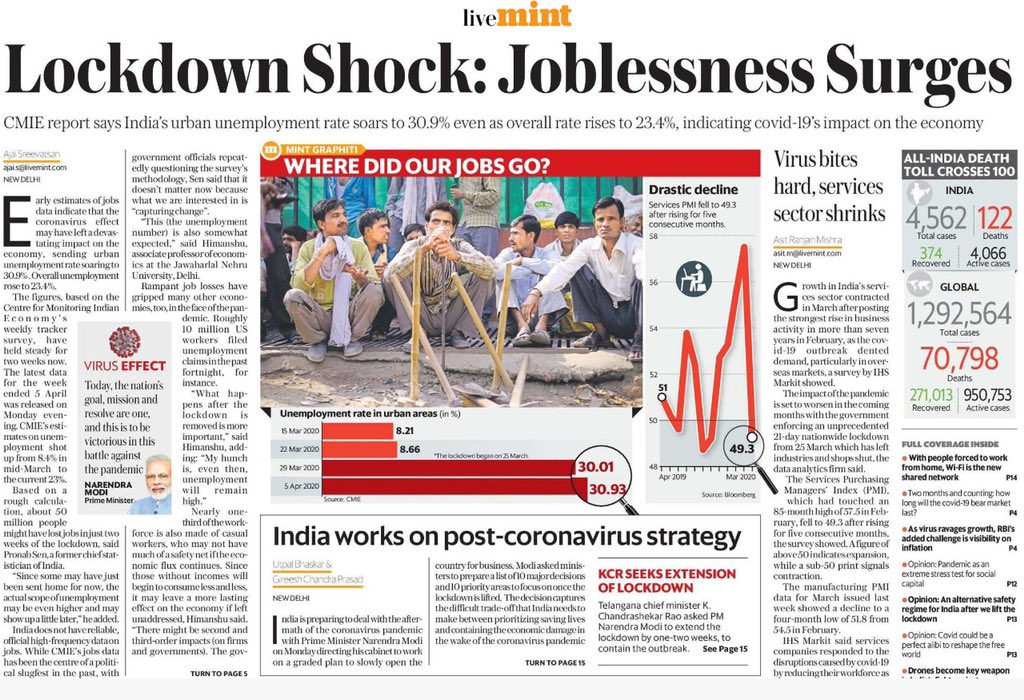
India: About 50 million people might have lost jobs in just two weeks of the lockdown


See also: https://www.livemint.com/news/india/covid-19-lockdown-impact-unemployment-rate-rises-to-23-4-11586202041180.html

Saturday, April 4, 2020

India: Despite Covid-19, why did migrant workers go back? Tariq Thachil (April 03, 2020)

Hindustan Times, April 03, 2020

Despite Covid-19, why did migrant workers go back?

They live alone, in illegally rented rooms or on the street, and face hostile authorities. Understand the desperation

by Tariq Thachil
 
The Covid-19-induced migrant crisis has prompted several questions. Who are these migrant communities? Why did the lockdown prompt them to flee from the cities, and why did the Centre and states not anticipate this? How can the State’s reactive response be improved, for now, and the future?(Amal KS/HT PHOTO)
We have all seen disturbing images of migrant workers trying to walk back to their villages after the sudden India-wide lockdown due to the coronavirus pandemic (Covid-19). In response, some state governments arranged buses to ferry them from designated urban depots to their villages. But the subsequent overcrowding in these depots defeated the purpose of social distancing, a prime motive of the lockdown.
This Covid-19-induced migrant crisis has prompted several questions.
Who are these migrant communities? Why did the lockdown prompt them to flee from the cities, and why did the Centre and states not anticipate this? How can the State’s reactive response be improved, for now, and the future?
It is tempting to view this crisis purely as a consequence of the challenges of Covid-19. The virus has flummoxed governments around the world, including those with far more resources than India. The coronavirus poses daunting questions of how to balance public health concerns with the economic fallout. Yet it would be a mistake to view the migrant crisis as an unintentional by-product of the pandemic.
My seven-year-long research on internal migrants shows that the government’s missteps were built on deeper, systematic inadequacies in its treatment of these communities. Internal migrants in India are a vast and heterogeneous population. The subset of migrants we are now talking about are marked by three traits. One, they predominantly migrate from villages to cities; second, they are low-income populations who work in the informal sector; and third, they have not permanently relocated their families to the city. Instead, they circulate between villages and cities several times a year.
There are three structural inadequacies in public understanding of circular rural-urban migrants.
The first is an inability to recognise the size and importance of these communities. For example, the National Sample Survey found the all-India rate of short-term migration to be 1.7% in rural areas, and less than 1% in urban areas. Yet many scholars think these figures are an underestimate and do not match with other data sources. For example, circular migrants dominate employment sectors such as construction labour. At present, 35 million workers are registered under various construction welfare boards, a number which by itself is nearly 3% of the population. While some construction workers may not be migrants, many migrants are not registered with these boards, and this is only one employment sector.
Our inability to correctly count short-term migrants is not surprising, given the informal conditions in which they live and work, and their shuttling between their villages and cities. These traits reduce the chances of accessing migrant respondents through standard residence-based surveys. This inability has real costs, rendering governments ill-prepared to anticipate the responses of migrant communities at crucial moments. Policymakers were unprepared for the speed and desperation with which these migrants attempted to return home following the lockdown order.
A deeper understanding reveals that this desperation is neither irrational nor surprising.
I conducted a survey with 3,018 circular migrant construction workers in Delhi and Lucknow. While this sample was limited to only male migrant construction workers, the survey’s findings are still instructive.
They reveal that migrants have few reasons to stay in their destination cities, and many reasons to leave.
The majority of those surveyed (63%) had no family members living with them. In the city, they lived in cramped and usually illegally rented rooms (52%); or slept on footpaths (25%). Less than 3% held ration cards registered in the city. Finally, they earn low wages, and remit most of their savings, leaving little to cushion them if work stops. This precariousness is furthered by the hostile treatment they receive from urban authorities, especially the police since they sleep in public streets, squares, and footpaths.
Remarkably, 33% of my survey respondents of migrants in Lucknow had experienced violent police action within the past year in the city, while fewer than 5% had ever done so in their home villages. They also live and work near urban elites, who frequently pressure local governments to act against them.
The survey also revealed that on average, these migrants made 2.55 trips each year to their home village, but also spent on average upwards of six months a year within the city. Further, over half had been engaging in circular migration for at least eight years.
Without addressing these conditions, it will be hard to deal with the current crisis or prevent future ones. While highly transient, a proper response can only begin with the recognition of circular migrants as part of India’s urban population.
Recognising migrants as part of our cities might compel authorities to at least consider how proposed policies might impact these communities. At present, such ex-ante awareness would have allowed the government to decide whether to target scarce resources towards enabling safe return or keep migrants in destination cities. Ex-post, we see government actors oscillating between these two strategies, thereby enacting policies at cross-purposes.
A policy centred on getting migrants home should prioritise dedicated transport options to prevent overcrowding, especially along high-intensity migration corridors. It will also require a set of protocols within villages for isolating migrants in a manner that is neither unsafe nor stigmatising, particularly as many migrants come from disadvantaged castes or minority faiths. Keeping migrants in cities can include direct cash transfers, as some states are trying through construction welfare boards.
Civil society organisations such as the Aajeevika Bureau have called for relaxing the restrictions that prevent migrants from accessing vital benefits such as food rations in their destination cities. Experts, including Nobel laureate Abhijit Banerjee, have called for repurposing available spaces, such as sports stadia and empty hotels, for migrants to stay in safely.
We must understand that such short-term measures cannot address old structural problems. For example, construction welfare boards cannot channel benefits to many migrant workers since many are not registered with them. There must be a registration drive to expand this net. Reconfiguring the domicile-centric public distribution system can help migrants. But most important, states must soften their view of migrants as a law and order problem, an attitude that has been all too clear during this crisis.
Worryingly, some of the directives from the ministry of home affairs order on the “restriction of movement of migrants” may only entrench repressive enforcement over compassionate accommodation. Unless migrants are afforded their rights, and dignity in the cities they build, these unresolved issues will bedevil us again in the future.
Tariq Thachil is associate professor (Political Science), Vanderbilt University
The views expressed are personal

Friday, April 3, 2020

India’s coronavirus mass migration: How we’ve misunderstood the Indian migrant labourer | Sugandha Nagpal, Vatsalya Srivastava

LSE Blogs

Sugandha Nagpal

Vatsalya Srivastava

April 3rd, 2020

Long Read: India’s coronavirus mass migration: How we’ve misunderstood the Indian migrant labourer

On 24 March, in a bid to stop the spread of Covid-19, Indian Prime Minister Narendra Modi announced a complete lockdown of the country. In response, millions of migrant workers left their jobs and began to return to their home villages – but why? Here Sugandha Nagpal (O.P. Jindal Global University, India) and Vatsalya Srivastava (O.P. Jindal Global University, India) argue why most interpretations of their motivations to head home maybe wrong.

Our inability to view the migrant labourer as a multifaceted human being with complex needs and demands is not novel to the present crisis in which, the Indian government’s lockdown in response to Covid-19 has left migrant labourers stranded and vulnerable. It characterises much of the Indian state’s response to internal migrants, who have been engaged with through the lens of poverty rather than a comprehensive view of their social, economic, cultural and political lives. Even in the ongoing response to swarms of migrants trying to make it back home, the knee jerk reaction has been to provide them food, money and shelter. There is little acknowledgement that much like all of us in the time of such uncertainty and unrest, the migrant labourer may be motivated to seek solace with their families at home. The inadequacy of the government’s response and the urgency of the situation must lead us to revisit our assumptions about the migrant labourer. Only with a better understanding of their defiance of the lockdown can we expect to avoid a repeat of the scenes that have been playing out in cities across India.
The 2017 Economic Survey of India estimated that between 2011 and 2016 there were close to 9 million inter-state migrants. In 2011, the total number of internal migrants was 139 million. These numbers relay the scale of the present crisis and the number of people that may be affected. Most internal migrants come from Uttar Pradesh and Bihar followed by Madhya Pradesh, Punjab, Rajasthan, Uttarakhand, Jammu and Kashmir and West Bengal.
Over the last ten days, the national media has been reporting heart-wrenching stories of migrant labourers trying to walk hundreds of kilometres to their home states, mostly from the states of Delhi, Gujarat, Punjab and Haryana. Just a few days ago images of migrant labourers swarming to the Delhi bus terminal went viral. These stories paint the image of vulnerable migrants that were left high and dry by a sudden lockdown. Initially, most media accounts cited this movement as stemming from a loss of work. But in the last few days a more nuanced view of this reverse migration has emerged.
It is not only the loss of work that these migrants are concerned with, they are also worried about being separated from their families in this difficult time. In Gurdaspur, Punjab, despite being given assurances of food and shelter, a reported 5,000 of the city’s 15,000 migrant labourers have walked to their homes in Bihar and UP. Some have emphasised that they need to go back to take care of their family, others are returning to assuage their family’s fears. With the virus being seen as an urban problem brought in by the more privileged international migrants, villages in the migrant-sending states are thought of as being safer than cities and many simply want to go to a safer place. Others still, want to avoid the possibility of not being able to return home at all. They fear that if they do not return now and contract Covid-19, they may never be able to return home due to the stigma around the disease or the chaos that is likely to ensue in the coming months.
The Indian state appears to have been caught off guard by the resolve and number of migrant labourers who want to return home. The state’s uncoordinated and hasty response has primarily been driven by its understanding of what poor labourers need and want. This response has been concerned with two things: providing the migrant labourer with some food, temporary shelter and preventing them from returning home, lest they spread the virus in the hinterland. The initial assurances by some state governments to provide food and ensure rent-free accommodation did little to assuage the concerns of migrant labourers, who in the past rarely had any reason to trust state promises. They continued to try to get home any way they could. Some congregated at places like bus stands hoping to get some transport, others simply started walking. In response, some state governments arranged buses to shuttle migrants back to their home and even made provisions of food. Those who could avail of this temporary availability of transport arrived at their destination. Those who could not, have been locked behind sealed borders and set up in temporary shelters.
On 31 March, the Supreme court mandated the provision of food, shelter and medicines for humane treatment of the migrants that were stranded. While the Supreme Court judgement recognises the anxiety and fear of the migrants, and even recommends making counselling services available to the affected, the unfortunate aftermath of the initial government response continues to play out. Reports from Bihar and UP indicate that upon returning to their home villages, migrant labourers are being barred from entering their villages due to fear that they may be carrying the infection. In a stark example of government action that might exacerbate social discrimination: returning migrants were hosed down in chlorine solution by the district authorities of Bareily in UP. This treatment of migrant labourers is in contrast to the treatment met out to Punjabi international migrants, who despite being some of the initial carriers of Covid-19 in the state continue to reside in their villages and in many cases violate home quarantine measures.
The Supreme Court’s judgement with its emphasis on improving provision of food and shelter by the state is an extension of the state’s long-held position of treating migrant labour through the category of the poor. The Indian state has historically viewed internal migration as an economic problem to be addressed through employment generation programs like MGNREGA. The primary focus of such a program being to mitigate the circumstances thought to drive out-migration, by generating employment in rural areas and bridging wage differentials. This framework constructs internal migration as a problem that emerges only due to low levels of development in sending communities and states. It overlooks the social, political and cultural dimensions that underlie decisions to migrate, as well as experiences of migration. Anthropological studies on migration indicate that migration is often tied to ideas of modernity, progress, social mobility and in some cases becomes an important component of local cultural norms.
The lack of acknowledgement in the current crisis of the migrants’ desire to be with their families echoes a narrow construction of the migrant actor through the lens of their economic impoverishment. However, this approach not only overlooks the agency of the migrant actor, it is also short-sighted in ignoring that simply locking down people in temporary shelters, away from their social support systems is not sustainable. It is unreasonable to expect that large numbers of restive people can continue to be housed in temporary shelters. Many will try to find ways to escape their confinement and any instances of strong-arming by the state will probably worsen the situation.
A more sustainable way to manage the problem will have to take cues from the anthropological approach to migration and understand the crisis as one of thwarted aspirations and the fear of being stuck in limbo. This will require appreciating migrants’ choice to go home in poorer states, knowing that these states have promised less economic support and have fewer medical facilities. The policy intervention that will emerge from this holistic understanding of migrants can aim to facilitate their return home in way that manages the risk of migrants carrying Covid-19 into their villages.
One way of doing this is to ensure speedy and efficient testing of migrants housed in temporary camps. The urgent need for ramping up testing has been much much talked about, but nowhere is it more urgent than in these camps. Even if the shortage in testing kits persists, it would be prudent to prioritise these camps and the homeless, the others can still escape the worst by being locked in houses. Once it is established that the person carries no risk, arrangements for travel can be made via trains to the capitals of their respective states. These arrangements must be made by the central government to avoid any inter-state haggling. With plenty of spare railway capacity at their disposal, this should not be very difficult to arrange. Once in their state capitals, state governments can make arrangements for people to get back home. These measures will have to be supplemented with wide-spread information campaigns in the states of Bihar and UP, where most of these migrants will be returning to assure the people residing there that everybody who is returning has been tested.
These suggestions do not preclude the necessity of economic support but serve to point out that managing crises also involves developing a deeper understanding of the populace and their needs. While it is possible that the process of returning migrants home might create other problems such as determining who should be tested first, it is crucial to engage in these difficult decisions with the knowledge that at the present time there are no good outcomes only less bad ones. If a country like India, with its poor health infrastructure and limited state capacity, is to have any chance in the fight against Covid-19, it cannot be fighting its citizens. India’s hope lies in strengthening its weakest link and giving it the best chance to survive in the face of this growing threat.

This article gives the views of the author, and not the position of the South Asia @ LSE blog, nor of the London School of Economics.

About the author

Sugandha Nagpal

Sugandha Nagpal is an Assistant Professor of Sociology in the School of International Affairs at O.P. Jindal Global University. Her research is in the areas of migration, gender, education and rural development.

Vatsalya Srivastava

Vatsalya Srivastava is an Assistant Professor of Economics in the School of Government and Public Policy at the same university. His research is in the area of microeconomics of governance.

Thursday, April 2, 2020

COVID-19 Puts Millions of Global Supply Chain Workers at Risk | HRW

Human Rights Watch

COVID-19 Puts Millions of Global Supply Chain Workers at Risk

Businesses Should Cushion Economic Impact
A woman sews face masks at a furniture factory in Eldorado Park, Johannesburg, Tuesday, March 24, 2020.
© 2020 AP Photo/Shiraaz Mohamed
There are an estimated 450 million people working in global supply chains, many of whom face reduced income or job loss as a result of the COVID-19 pandemic.
Companies around the world are closing shops, cancelling orders, and stopping production. The garment industry is particularly hard-hit, but other businesses like mining, jewelry, or automobile sectors are suffering too. Workers in these supply chains are among the most vulnerable and most affected by the crisis.
If it was not clear before COVID-19, it is now: Businesses are connected through a world wide web of global supply chains, and the behavior of large companies impacts those working at the bottom of these supply chains.
So what does responsible company behavior look like in this pandemic?
Companies that have closed temporarily have found ways to pay their workers in supply chains. For example, South African suppliers and textile workers unions have agreed to a national collective bargaining agreement paying workers six weeks in full during the lockdown. By contrast, many suppliers in Myanmar, Cambodia, and Bangladesh have suspended work without paying workers even for work already completed. Global brands who source from suppliers in these countries should pay for the orders that have already been completed or were in progress. A few retailers, including H&M, have done this for their global suppliers but many others have left their suppliers hanging.
Where factories or other workplaces are still operating, workers’ health needs to be protected, including through protective gear, social distancing, and flexible work arrangements. Workers across the supply chain also need to be able to take paid leave when they’re sick or to care for ill relatives.
Many companies are struggling immensely in this crisis. But they should not forget about the workers in their supply chains. Companies should do what they can to ensure workers are safe and continue to have an income to be able to feed their families. More generally, they should use this moment to review their supply chains and ensure they have robust protections for workers, in line with international standards, and ensure that the purchase prices they pay factor in workers’ social protection.

source URL: https://www.hrw.org/news/2020/04/02/covid-19-puts-millions-global-supply-chain-workers-risk

Wednesday, April 1, 2020

Coronavirus threatens Indian garment workers stranded in factory housing | Anuradha Nagaraj

 Coronavirus threatens Indian garment workers stranded in factory housing

by Anuradha Nagaraj | @anuranagaraj | Thomson Reuters Foundation
Monday, 30 March 2020 12:29 GMT
Image Caption and Rights Information

Coronavirus is changing the world in unprecedented ways. Subscribe here for a daily briefing on how this global crisis is affecting cities, technology, approaches to climate change, and the lives of vulnerable people. 
By Anuradha Nagaraj
CHENNAI, India, March 30 (Thomson Reuters Foundation) - The coronavirus pandemic has left tens of thousands of Indian garment workers stranded in cramped accommodation on factory premises where social distancing is difficult to put into practice, labour rights campaigners said on Monday.
A three-week nationwide lockdown has left an estimated 300,000 workers in India's multi-billion dollar garment stuck in factory hostels where rooms are shared by up to a dozen people.
Most manufacturing units and spinning mills in the southern state of Tamil Nadu are closed - those supplying to hospitals remain open - leaving workers in close proximity and raising concerns that they could unknowingly be spreading the virus.
"Hostel conditions are not ideal at all under the circumstances," said R. Karuppusamy, director of charity Rights Education and Development Centre, which helps garment workers.
"We are very concerned for these young workers as many have been in and out of the factory before the lockdown was announced," he told the Thomson Reuters Foundation by phone.
India has at least 1,071 cases of the coronavirus and 29 have died. Officials say India is weeks away from a major surge in cases that could overwhelm its weak public health system.
About 40,000 garment factories and spinning mills operate in Tamil Nadu, with many running hostels on their premises to house their staff - most of whom are young women and migrant workers.
Social distancing is key to containing the spread of the virus in the sector, said state health secretary Beela Rajesh.
"All factories have been made aware of this," Rajesh said.
"Besides, the industries and labour department officials have set up teams to monitor and inspect factories."
The teams will ensure that factories remain closed, monitor sanitation and hygiene, and check on workers' health, she added.
SOCIAL DISTANCING CONCERNS
The Southern India Mills' Association (SIMA) - a trade body representing about 500 factories - has also instructed members to ensure all workers on their premises are given due care.
"But there are challenges and social distancing is probably the toughest," said Selvaraju Kandaswamy, its general secretary.
SIMA is urging its members to pay their workers at least half of their wages while closed. The federal government and Tamil Nadu state have instructed factories to pay salaries during the lockdown, and provide workers with food and shelter.
Temporary factory closures and layoffs have already begun to hit garment workers across Asia - from India and Bangladesh to Cambodia - with top global brands delaying or cancelling orders.
SIMA has asked the government to allow the partial reopening of factories as this would enable shift working and free up space in hostel rooms to facilitate better social distancing.
"We want to start production so that workers are not sitting idle in rooms," Kandaswamy said. "It will help in social distancing as well since rooms will not be overcrowded.
"We understand the implications of coronavirus and well-being of workers is of utmost importance."

(Reporting by Anuradha Nagaraj @AnuraNagaraj; Editing by Kieran Guilbert. Please credit the Thomson Reuters Foundation, the charitable arm of Thomson Reuters, that covers the lives of people around the world who struggle to live freely or fairly. Visit http://news.trust.org)

source URL: https://news.trust.org/item/20200330115141-jaq9i/

India: 2020 Noida’s migrant worker exodus | Nilotpal Kumar and Ritanjan Das

Noida’s migrant worker exodus is more about their notions of ‘home’ than coronavirus: Study

Our research in Noida for the past two years shows many poor migrant workers do not think of city of work as their home. They are treated as outsiders and live in cramped spaces.

and 1 April, 2020

housands of migrant workers began walking home from Delhi and adjoining areas of the NCR within just a few days of the 21-day coronavirus lockdown, alarming the central and state governments. They ignored calls to stay put in Delhi— ‘their own home’. But many poor migrants do not think of the city of work as their home, which is a specific place of belonging and security.
We have been conducting field research on migrant workers’ experiences in Noida since 2018 and many of the findings help us understand the reasons for their exodus. [ . . . ]

Tuesday, March 31, 2020

India’s anti-COVID strategy is premised on a mistaken idea and a pretence | Sanjay Srivastava

The Indian Express

India’s anti-COVID strategy is premised on a mistaken idea and a pretence

Epidemics are social dramas whose plots are made from the bricks and mortar of local material. An understanding of this will tell us who lives, who dies and what kind of society emerges.

Written by Sanjay Srivastava | Updated: April 1, 2020 9:37:05 am
Coronavirus update, coronavirus news, coronavirus cases, india coronavirus update, coronavirus latest, india coronavirus news, coronavirus latest news, Delhi Nizamuddin
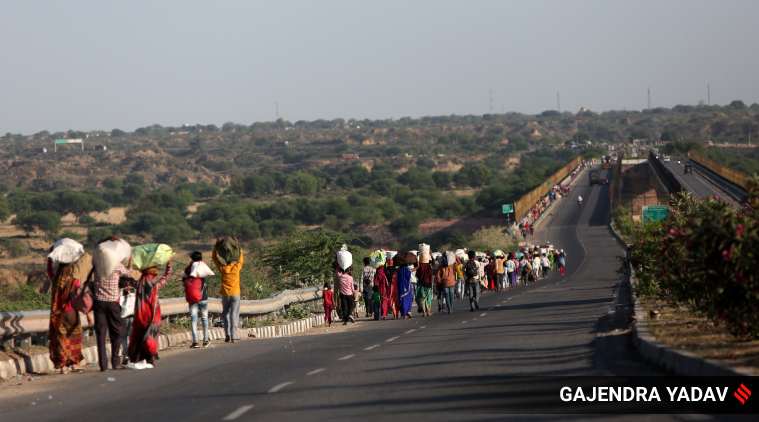
On Tuesday, the flow had almost ceased at the Gujarat-MP border that had seen a sea of migrant labourers for almost a week. (Express Photo by Gajendra Yadav)
The odd thing about an epidemic is that though it might be global in nature, it is impossible to understand its impact without paying close attention to the local conditions within which it circulates. Calls for global solidarity in a time of crisis are well-meaning. However, epidemics are social dramas whose plots are made from the bricks and mortar of local material. An understanding of this will tell us who lives, who dies and what kind of society emerges in the wake of a calamity that no poor country is equipped to handle.
The most significant aspect of life in countries such as India is informality — of jobs, living arrangements, healthcare, mobility and much else. We know, for example, that around 90 per cent of the population works in the non-formal sector, around 20 per cent of Indians are internal migrants (the vast majority moving across district and state boundaries for informal employment) and that, in many of our major cities, as much as 40 per cent of the population lives in informal settlements. Informality is the state of life beyond regulation. It is also a condition of great helplessness, where the capacity to exercise choice over one’s destiny is limited. For the majority of India’s (and the world’s) population, informality is not a staging post on the way to formality. It is a persistent condition of life with no indications of a dramatic change.
Yet, in India, we seem to have decided to not address the context that is most relevant to the conditions of life that have the greatest relevance to the majority of the population. This is the population that has no choice but to stay outdoors, live 10 to a room and be mobile as a livelihood strategy. There can be no universal strategy — or computer simulation — that can provide solutions for the present crisis. For, there is no “universal humanity”. While we share biology, we are fundamentally distanced by the histories that produce the social and economic conditions within which we live. This calls for specific strategies for dealing with COVID-19.
Editorial | Exodus of migrant labour from cities is an enormous human crisis, and an impending economic one
First, the issue of livelihoods. This has, so far, been primarily addressed through an anti-virus strategy that is premised on the idea that India is primarily a land of formal offices, industrial establishments and hotels. Indian cities contain some 10 million street vendors and street vending — just one form of informal work — makes up approximately 15 per cent of the urban workforce. If we were to add the circuits of interdependence — family members and those part of the product supply chain — then, according to sociologist Ritajyoti Bandyopadhyay’s estimates, street vending is second only to agriculture as a source of livelihood. Our cities are, then, spaces of intense and involuntary intermingling and a ban on such activity is a matter of further immiseration for millions. Should the government not have consulted bodies such as the National Hawkers Federation for policy measures that take account of the kind of cities we have rather than the imagined ones?
Second, while Indian cities are home to long-term rural migrants, these are not populations who have severed ties to their villages. They return home for a variety of reasons, the most significant being in moments of catastrophe such as slum demolitions, illnesses and job losses. And, of course, now the virus. The village is the hospice of the city. It provides treatment, rehabilitation and healing to the city’s underclass, returning them, without charge, to the city as an endless supply of labour. As might be imagined, circular migration is the highest among the poorest of urban populations and Muslims, Scheduled Castes and Tribes form the largest number of such migrants.
Opinion | At the stroke of midnight on March 24, India suspended ‘politics’. The effects will stay with us
Those who have no means of support in the city head home to the village in times of hardship. While some complain that circular migration holds back urbanisation, were it not for this extraordinary and constant to-and-fro movement between the city and the village, the former would be overwhelmed with the debris it makes out of the bodies of the urban poor. As the poor build the city (literally, since the construction industry is the largest employer of seasonal migrants), their key hope of relief from its misery is the ability to retreat to the village. Under current circumstances, they neither have the means of survival in the city nor are able to return to their villages. And those of them who have managed to scramble back will continue to live — for how long, who knows? — in the shadow of a virus they might carry. But they are out of sight of the broad-brush policy of lockdown.
Notwithstanding the persistence and overwhelming evidence of informality as a social and economic fact — across cities in particular — processes of policy-making and governance are based on the pretence that the model most suited towards administering people and places is one that borrows from an ideal-type. That is, while the actually existing conditions of urban life might call for methods of governance based on a localised understanding of actual conditions of life, what we invariably get is aspirational policymaking. Aspirational policymaking —we want our cities to become like Singapore and New York, so we think we can apply their policies at home — has little concern for the common good. It is based on the spurious idea of an India that must keep pace with the “global” world through acting “globally”. We build gated communities to keep problems out, rather than deal with them. Similarly, the consequences of aspirational policy-making are rarely considered. For, like much else, the task of dying and suffering is easily outsourced to those who can be locked out.

Monday, March 30, 2020

India: Beware of a lopsided lockdown | Jean Drèze (26 March 2020)

The Hindu
March 26, 2020 00:02 IST

Beware of a lopsided lockdown

The poor seem to count for very little in the Central government’s curfew plan

“I am willing to go hungry if there is no other way to stop this virus, but how will I explain that to my children?” We heard these poignant words two days ago from Nemi Devi of Dumbi village in Latehar district, Jharkhand. Her son and husband, both migrant workers, are stranded far away. In village after village, many other women expressed similar worries. And that was even before the Prime Minister announced a drastic 21-day lockdown, from Wednesday.
The enormity of the coronavirus crisis is gradually dawning on India. For you and me, it is still in the future. But for many informal-sector workers and their families, the crisis is already in full swing: there is no work, and resources are running out. Things are all set to get worse as the privileged hoard with abandon and food prices go north.
 Hopefully, the Central government’s decision to impose a 21-day lockdown will prove right in due course. But the lockdown (a virtual curfew) is crying out for relief measures, including income support for poor families. As it happens, most of them already receive a limited form of income support: food rations under the Public Distribution System (PDS). Under the National Food Security Act, two-thirds of Indian families (75% and 50% in rural and urban areas, respectively) are covered. In most States, including the poorest, the PDS works — not perfectly, but well enough to protect the bulk of the population from hunger.

Use excess food stock

The PDS is the country’s most important asset in this situation. It is essential to keep it going, even to expand it, in terms of both coverage and entitlements. Fortunately, India has gigantic excess food stocks. In fact, it has carried excess food stocks (more than twice the buffer-stock norms) for almost 20 years, and this is the time to use them. Nothing prevents the Central government from, say, doubling PDS rations for three or even six months as an emergency measure. That will not make up for most people’s loss of income, but it will ensure that there is food in the house at least.
Some bold steps are required to make food distribution effective. For instance, biometric authentication (fingerprint scanning) is best removed at this time — it is a source of exclusion as well as a health hazard. Distribution needs to be staggered and tightly supervised, to avoid crowds and cheating at the ration shop. Dealers who are caught cheating must be swiftly punished. All this is well within the realm of possibility; the main thing is to release the stocks without delay.
 Having said this, the PDS is not enough. For one thing, many poor people are still excluded from it. Large-scale cash transfers are also required, starting with advance payment of social security pensions and a big increase in pension amounts (the Central government’s contribution has stagnated at a measly ₹200 per month since 2006). Here, one possible hurdle is the payment system. Many pensioners collect their pension from “business correspondents” (BCs) – a kind of human automated teller machine (ATM), who dispenses money on behalf of the bank. The problem is, unlike ATMs, most BCs use biometric authentication rather than smart cards. And mass biometric authentication could accelerate the transmission of the novel coronavirus.

Payment arrangements

Ideally, biometric authentication should be abandoned for now. Even if it is not, many BCs may vanish for fear of infection (most of them are poorly-paid employees of poorly-regulated private entities). Under both scenarios, something has to be done to ensure safe crowd management at the bank. New payment arrangements are also possible. For instance, social security pensions could be paid in cash at the panchayat bhavan on a given day of the month, obviating the need for everyone to go to the bank: this has been done in Odisha for years, with good results. Cash could also be disbursed, with due safeguards, through anganwadis or self-help groups. Cash transfers need not be limited to social security pensions. Revamping the PDS and social security pensions would go a long way, but a significant proportion of vulnerable families are likely to fall through the cracks. Further, food rations may prevent hunger but people have many other basic needs; they will need money to cope with this spell of unemployment.
Coronavirus | Interactive map of confirmed coronavirus cases in India
There are several possible ways of extending the reach of cash transfers beyond pensions. For instance, money could be sent to the accounts of Mahatma Gandhi National Rural Employment Guarantee Act job-card holders, or Pradhan Mantri Kisan Samman Nidhi (PM-KISAN) beneficiaries, or PDS cardholders. How these lists are best used and combined is a context-specific question, perhaps best handled at the State level (my sense is that in many States, the MGNREGA job-cards list is the best starting point).
Coronavirus | Pandemic fallout revives talk of universal basic income
These are just some examples of possible emergency measures. Many other valuable suggestions have been made, relating for instance to midday meals, community kitchens and relief camps for stranded migrant workers. The first step is to make relief measures an integral part of the lockdown plan. Failing that, it may do more harm than good. For one thing, a hungry and enfeebled population is unlikely to fight the virus effectively. A constructive lockdown should empower people to fight back together, not treat them like sheep.
Finally, Centre-State cooperation is essential. Many State governments have already initiated valuable social-security measures, but they are far from adequate. The Central government, for its part, has been struck with inexplicable paralysis on this. Adequate relief measures require big money (lakhs of crores of rupees) from the Central government. Implementation, however, should be led by the States. They all have their own circumstances and methods. The Central government is unlikely to do better on their behalf. If it foots the bill, that will be a good start.
Jean Drèze is Visiting Professor at the Department of Economics, Ranchi University

India: The finance minister’s Covid-19 relief package is helpful, but there are gaping holes in it | Jean Dreze (28 March 2020)

The Economic Times

View: The finance minister’s Covid-19 relief package is helpful, but there are gaping holes in it

​​How are they supposed to feed themselves and their families for 21 days, possibly much longer, without any work opportunities? Rickshaw-pullers, construction workers, migrant labourers and many other groups are also at risk. Some are already on the brink of starvation.

ET CONTRIBUTORS|
Last Updated: Mar 28, 2020, 10.03 AM IST

By Jean Drèze

Even as the novel coronavirus continues to spread, a humanitarian crisis is looming over India. Just think about, say, landless agricultural labourers -- there are more than 14 crore of them ( bit.ly/2UEpsxw) -- who live in the shadow of hunger at the best of times. How are they supposed to feed themselves and their families for 21 days, possibly much longer, without any work opportunities? Rickshaw-pullers, construction workers, migrant labourers and many other groups are also at risk. Some are already on the brink of starvation.

The relief package announced by Finance Minister Nirmala Sitharaman on Thursday, Pradhan Mantri Garib Kalyan Package (PMGKP), is a step in the right direction. But this package is more modest than it sounds. Indeed, the budget has been padded. For instance, by including Rs16,000 crore of pre-committed Pradhan Mantri Kisan Samman Nidhi (PM-KISAN) expenditure, and Rs5,600 crore for Mahatma Gandhi National Rural Employment Guarantee Act (MNREGA) scheme wage increases that had already been notified by the rural development ministry on March 23 ( bit.ly/39l17SI).

The release of excess foodgrain stocks is billed at so-called economic cost, when in fact, their opportunity cost is much lower. (This is an old accounting anomaly for which the FM is not responsible.) And the funds being sought from construction workers’ welfare funds don’t really belong to the Union government. If we focus on novel relief measures funded by the Centre, the budget is likely to be closer to Rs1 lakh crore than Rs1.7 lakh crore.

The relief package rightly builds on food rations, as well as cash transfers. The food-related measures are largely welcome, including the doubling of foodgrain rations for an initial period of three months, and the addition of pulses to the public distribution system (PDS). Many poor people, however, are still excluded from the PDS -- all the more so as GoI is still using 2011 population figures to calculate state-wise PDS coverage under the National Food Security Act. Using projected 2020 population figures, instead of 2011 figures, would make it possible for state governments to issue a good number of new ration cards. Even if this happens, it will remain important to supplement food rations with cash transfers.

The PMGKP’s framework for cash transfers, however, is far from perfect. First, social security pensions for the elderly, widows and the differently abled have received short shrift once again. GoI's contribution to social security pensions has stagnated at a measly Rs200 per month since 2006, despite repeated appeals for more. It should have been raised to Rs1,000 per month at least, on a permanent basis. Instead, pensioners are getting a meagre one-off grant of Rs1,000, at a cost of just Rs3,000 crore.

Second, the case for using women’s Pradhan Mantri Jan Dhan Yojana (PMJDY) accounts as the main destination for emergency cash transfers (worth Rs31,000 crore) is not clear. The list of MNREGA job cards would probably be a better choice. That list consists mainly of poor households, and is fairly comprehensive. The PMJDY list includes many middle-class individuals, and excludes many poor people.

PMJDY accounts were opened en masse in a tearing hurry, and many of them are now suspended, or seeded with wrong Aadhaar numbers, or unknown to the account holder, or stashed with black money. The job-cards list is more transparent, reliable, well-tested and pro-poor than the PMJDY one. Also, it is a natural complement to social security pensions, since pensioners are mostly out of the workforce. Its main limitation is that it is a rural list -- if it is used, a different list (PMJDY or other) would have to be used in urban areas.

Third, the cash-transfer amounts are small. The PMGKP allocation of Rs31,000 crore for transfers to PMJDY accounts covers a monthly allowance of Rs500 per month for about 20 crore recipients, for an initial period of three months. It is impossible for a family of average size to survive on Rs500 a month.

Whether it is food or cash, the disbursement system will be a huge challenge ( bit.ly/2UmyFeL). With adequate resources, however, this trio -- PDS, social security pensions and other cash transfers -- can go a long way in building a safety net. But some people are bound to fall through the cracks. To avoid a tragedy, the relief system needs a fourth leg -- emergency lines that can be accessed anywhere by anyone who is at risk of hunger.

There is some experience with emergency lines. The ‘KBK districts -- Kalahandi, Bolangir and Koraput -- of Odisha used to have feeding centres for destitute persons in rural areas, until 2015 when GoI pulled the plug on this valuable scheme. In Jharkhand, gram panchayats (GPs) have an emergency fund of Rs10,000 to help anyone who is at risk of starvation. In Rajasthan, GPs used to have two sacks of grain for the same purpose. Many states have community kitchens where anyone can get a simple, nutritious meal at a nominal price.

These arrangements are just a fraction of what is required today, but they show the way. Building on these experiences, effective emergency lines can be put in place. State governments are best placed to do this (some are on the job). But the central government must provide resources, starting with foodgrain -- the godowns are overflowing. Support for emergency lines is a gaping hole in the finance minister’s relief package.

Emergency lines have to be put in place <right away> -- within a few days, not a few weeks. Horrendous stories have already started pouring in of people going hungry, notably among migrant workers who are marooned all over the place. This is not the time to ask for their ration card or Aadhaar number -- they must receive immediate, unconditional public assistance.

All this is about income support. Needless to say, much else ( bit.ly/2WReNSH) needs to be done by way of humanitarian relief, including effective health services and nutrition programmes for children (largely discontinued today as anganwadis and schools are closed). As and when the situation improves, MNREGA will also become important again, both for immediate relief and for economic reconstruction. The government’s action plan must urgently move beyond the limited measures initiated this week.

The writer is visiting professor, Department of Economics, Ranchi University, Jharkhand
(Disclaimer: The opinions expressed in this column are that of the writer. The facts and opinions expressed here do not reflect the views of www.economictimes.com.)

Pakistan - Karachi: Why the Covid-19 crisis is an urban crisis

Dawn

Why the Covid-19 crisis is an urban crisis

Approximately 60% of Karachi's population lives in informal settlements with limited access to water and sanitation. 
 
   Updated Mar 30, 2020 08:46pm
 
As we brace ourselves for the Covid-19 epidemic in Pakistan, we are being told to wash our hands and self-isolate. What if you are unable to do any of these things? According to the Census 2017, Pakistan's population is 207.8 million with an urban share of 75.6 million. The United Nations asserts that in 2015, 45.5% of Pakistan's urban population was living in informal settlements. Thus, an estimated 34 million people in Pakistan live in katchi abadis or urban informal settlements, where water is scarce for the most basic of needs.
In Karachi — a city of over 16 million — approximately 60% of the population lives in informal settlements with limited or no access to clean water and sanitation. Let us compare this — for a moment — with countries being devastated by Covid-19. For example, Italy and Spain, where there is almost universal access to clean water, sanitation, soap and antibacterial gels. Even with their comparatively tiny populations, the virus has spread and killed at a pace no one could imagine. So with northern health systems on the brink of collapse, will the spread of Covid-19 in Pakistan bring urban informal settlements to the frontline of the crisis?
The threat to Pakistan is palpable. As we anxiously await the impact while self-isolating, the voices of the most vulnerable are barely audible. What health threats do the 34 million people living in Pakistan’s informal settlements face? What does this mean for the spread of Covid-19 across the country? How can we leverage data for designing urgent planning interventions that will actually work?

Access to water

While the instructions for containing the spread of the virus sound fairly simple — wash your hands for 20 seconds with soap multiple times a day — it is not an easy task for the majority of Pakistan's informal settlements that are water deprived. Access to water varies massively. People living in Karachi's Machar Colony, an informal settlement at a considerable distance from the city centre, pay Rs7,000-8,000 a month in water purchased through tankers and other informal means. Residents of Gharibabad, near Karachi's PIDC, spend over Rs5,000 a month on the same. For poor households, this is a very significant portion of their earnings. The idea of using that water repeatedly for washing hands is a luxury. Here are some basic calculations on daily water use for maintaining hygiene:

Just for a single month, a household of eight would then require 750 additional gallons of water. This constitutes half of a 1,500 gallon tanker, which costs at least a minimum PKR2,500 in a typical informal settlement. The additional financial cost for basic protection against Covid-19 by washing hands, would then be around PKR1,250 per month for the family. While the figure does not seem very high in isolation, it becomes a critical portion of their income in the absence of earned daily wages amidst the current lockdown. Can a low-income family in an informal settlement even be capable of providing for this additional water expense in times when the same amount would be needed to buy essential food items?
Cost alone (leaving aside logistical factors such as water availability, transportation, waiting lines) — to perform hand washing as per government recommendations — points to the absolute urgency of making cheap water provision a top priority for informal settlements. Without that intervention, the virus is likely to spread like wildfire, the consequences of which are hard to imagine.
Such a sorry state of our existing water infrastructure is indicative of the larger problem. A 2016 International Development Research Centre (IDRC) report investigated the state of infrastructure in Pakistan's urban informal settlements. It concluded that a drastic overhaul is needed in urban planning and services to enable infrastructural upgrading, especially for public health and access to decent work. Unsanitary environments, in densely populated areas, have devastating a impact on health and livelihoods. For too long the health and social needs of such populations have been invisible. Now — our lives are more interconnected than ever — without addressing their needs, the whole city is at risk.
This brings us to the second recommended measure: social distancing. Let’s look how practical this measure is, using existing spatial and household data.

Density, space, data

The most critical input for tackling urban issues is data. What data sets do we need right now? To phrase it another way: what data-sets — open access and appropriate for secondary analyses by independent researchers or institutions to supplement the meagre data visualisation capacity of all tiers of government — actually exist, for Karachi, and for urban Pakistan?
In Sindh province, the government estimates that there are 1,414 katchi abadis out of which 575 are in Karachi and 408 in Hyderabad. A 2008 World Bank study indicates there are a total 902 katchi abadis in urban Punjab; 65 in Khyber Pakhtunkhwa, 55 in Balochistan and 52 in Islamabad. With these sparse, and potentially out of date figures, we can roughly estimate a total of 2488 informal settlements across Pakistan's major urban centres. This data excludes the numerous goths (approximately 900, as per an Orangi Pilot Project study and the Karachi Strategic Development Plan 2020, that dot Karachi's periphery; areas that are rapidly transforming into peri-urban settlements), with no clear planning regulations, no formal mechanisms for service provisions, often needing to tap into (siphoning) water and other public utilities to survive.
In cities like Karachi, there is a double deficit: data on informal settlements is either not collected regularly, and if it is, it is not disaggregated — especially on social indicators such as health. How can the various tiers of government tackle this crisis through emergency plans if they do not have realistic and up-to-date figures on the number of people living long-term in a ward or district? What about the number and type of built structures they occupy? Their proximity and interaction patterns that could facilitate the spread? The capacity and effectiveness of the infrastructures serving them? Without this data relief planning for Covid-19 becomes a guessing game at best. This provides loopholes in the relief mechanisms — loopholes that can be exploited for populistic provision rather than for where the need is highest.
The most comprehensive and reliable data on demographics in Pakistan is supposed to be gathered by the population census. Yet, reflecting on the methodology adopted for the 2017 census, this crisis demonstrates the ineffectiveness of the data: it collected de jure data on Pakistani citizens, counting them in the wards/districts displayed on their CNICs, and not where they were actually living. Such data quickly becomes irrelevant for subsequent studies, and especially unusable for detailed analysis on the realities of lives and processes in urban Pakistan. Take the Covid-19 crisis: how can governments generate epidemiological models to predict its spread in populations when there is no existing or reliable data about them?
Based on work done by the Karachi Urban Lab over 18 months and spanning 13 informal settlements in different districts of Karachi, our findings reveal that people are living on plots as small as 20 square yards. Households have an average family size of eight to nine people, but barely accommodate a single room with a slab for a kitchen and a toilet. In locations where people have expanded vertically, household sizes go as high as 30 people per 80 square yards of plot. These household numbers are higher than the average represented in the 2017 census. The reality is that social distancing is almost impossible to implement in these settings. This kind of population density rings alarm bells for the safety and security of these urban residents and for the spread of Covid-19 across Pakistan. Coupling this constriction of available space for the vast urban majority with a city-wide curfew or extended lockdown hours spells disaster for people forced to confine themselves to tiny, dense, interior spaces. In cases of smaller plots or higher densities the scenario becomes even more unnerving. This, coupled with studies which show that 88% of the housing stock in the city consists of plot sizes 120 square yards or less, lies in strong contrast to people living in houses sized 400-2000 square yards constituting only 2% of the housing stock.

Health and vulnerability

Dozens of informal settlements in Karachi have been under the threat of eviction for the past 18 months. More than one thousand households have already been rendered homeless in Karachi's District Central. Our ongoing and participatory research with residents, shows that about 40% of households in informal settlements have at least one family member who requires special medical and social care. Adding to the staggering numbers of immunocompromised individuals, there is a diversity of medical, physical and social healthcare needs. About 70% of the persons who need care can be categorised as persons with chronic illnesses who are facing a heightened risk of contracting Covid-19.

The news of Covid-19 — added to eviction anxieties — has created very high levels of psychological stress amongst residents in informal settlements. The distress of managing the food, water and healthcare needs of the family had already reached unprecedented levels but now the lockdown is leading to further disruptions and distress disorders. Psychological research repeatedly shows that stress weakens immunity.
Women and girls are particularly vulnerable to these stressors and their impact. They are most likely to be trapped at home and absorbing significantly higher levels of care work during the lockdown. Levels of violence against women and girls have spiked in the lockdowns in China, the UK and the USA — there are real concerns about the safety and security of women and girls across Pakistan, but especially those in crammed households suffering immense precariousness.
The insecurity, uncertainty, and stress puts residents of informal settlements at high risk of immune-compromisation, compounding their vulnerability to Covid-19. They are at the frontlines of this crisis.

Long-term planning

The Covid-19 pandemic should be an urgent wake-up call for urban planners, bureaucrats and policymakers in Pakistan, to invest substantially and meaningfully in understanding and levelling out the highly unequal access to urban infrastructure services. Fragmented governance and lack of accountability at multiple layers of government have hindered inclusive planning efforts for decades. Residents of informal settlements can no longer be invisible to policymakers — as they are a critical part of the functioning of the city, and as some of the most vulnerable people, they deserve due attention.
Simply put, the long-term effects of Covid-19 combined with impacts of climate change, will take place in sites and at scales that involve populations which have never been accounted for in previous planning efforts. Here is a list of both urgent and long term recommendations:
  1. Restore the local government system across Pakistan.
  2. Immediately establish a coordination committee of representatives from provincial/local governments, NGOs and community leaders.
  3. Include and account for high numbers of persons with healthcare needs.
  4. Document up-to-date numbers and generate spatial data on populations in each ward, with particular emphasis on informal settlements.
  5. Prioritise emergency budgets to upgrade existing water infrastructures and include emergency provision of cheap and clean water in informal settlements.
This report has been co-authored by Adam Abdullah, Maheen Arif, Soha Macktoom, Arsam Saleem, Muhammed Toheed, Dr Nausheen H Anwar, Dr Gulnaz Anjum and Dr Amiera Sawas.
Header image: People reach out to get a charity food handout during a lockdown after Pakistan shut all markets, public places and discouraged large gatherings amid an outbreak of the coronavirus disease in Karachi, Pakistan on March 30, 2020. — Reuters