Monday, February 13, 2023

How many women work in India’s factories? | Dhruvika Dhamija (CEDA - Ashoka University)

 CEDA - Ashoka University

How many women work in India’s factories?

6 February 2023 | Economy, Gender, Workforce

Of the millions of workers who worked in India’s factories in 2019-20, less than a fifth were women. This share has remained largely unchanged for over two decades.

Key takeaways

  • The share of female regular employment in organised manufacturing has largely remained unchanged at 19 percent in the last two decades
  • Seventy two percent of all women working in industries across India were employed in just four southern states – Tamil Nadu, Karnataka, Andhra Pradesh and Kerala
  • Women are also more likely to be working in a handful of industries, while male employment is more diversified
  • Additionally, there is a wide gender-wage gap. For every INR 100 a male industrial worker earned as wages in 2019-20, his female counterpart earned only INR 87.06


Of the 8 million workers employed in India’s formal manufacturing industries in 2019-20, 1.6 million (19.7 percent) were women, data from the Annual Survey of Industries (ASI) shows. This share has remained largely unchanged for over two decades (see Figure 1).

Figure 1

<span data-mce-type="bookmark" style="display: inline-block; width: 0px; overflow: hidden; line-height: 0;" class="mce_SELRES_start"></span><span data-mce-type="bookmark" style="display: inline-block; width: 0px; overflow: hidden; line-height: 0;" class="mce_SELRES_start"><span data-mce-type="bookmark" style="display: inline-block; width: 0px; overflow: hidden; line-height: 0;" class="mce_SELRES_start"></span></span>Looks like your browser doesn’t support iframes.<br /> 


In this analysis, we look at the gender gaps in manufacturing employment in the country using ASI data for 2019-20, the most recent round of the survey. 

While the ASI contains plant-level data on several industrial indicators, it must be pointed out that the data pertains to only organised manufacturing units i.e. factories with 10 or more workers that use power or those with 20 or more workers operating without the use of power. Further, ASI provides gender segregated data only for “directly employed” workers – these are workers employed directly in a manufacturing process but excludes workers hired on contract and those involved at “clerical, supervisory, managerial, sales, watch and ward staff”.

Wide regional variations in gender composition of the industrial workforce

Even among this small share of women working in industries, there are wide regional and industry-wide variations. 

Of the 1.6 million women workers across India, 0.68 million (43 percent) were working in the factories of Tamil Nadu alone. In fact, nearly three-fourths (72 percent) of all women working in industries were employed in the four southern states of Tamil Nadu, Karnataka, Andhra Pradesh and Kerala.     

In addition to this skew in regional distribution, the gender gap in manufacturing employment varies widely across states. 

Figure-2 shows the share of women workers in the total industrial workforce by state. Manipur is the only state with a gender-balance among those working in its manufacturing sector. The share of women workers in the state stood at 50.8 percent in 2019-20. Manipur was followed by Kerala (45.5 percent), Karnataka (41.8 percent) and Tamil Nadu (40.4 percent). 

Chhattisgarh had the most gender-skewed industrial workforce with women making up just 2.9 percent of those working in its manufacturing units. It was followed by Delhi with women comprising 4.7 percent, and Jammu and Kashmir and West Bengal where women made up just 5.5 percent of the total manufacturing workforce each.

Figure 2


Among the five most industrialised states, the picture is mixed – with Maharashtra (12 percent), Uttar Pradesh (5.7 percent) and Gujarat (6.8 percent) having large gender gaps and Tamil Nadu (40.4 percent) and Andhra Pradesh (30.2 percent) faring much better. Women’s share among industrial employees was less than 10 percent in 16 states and union territories. 

Women workers are concentrated in a handful of industries

On top of this regional concentration, an industry-wide analysis of female employment from ASI 2019-20 shows a skewed gender workforce across most industries, and also suggests that women are more likely to be working in a handful of industries*.


Figure 3


Figure-3 plots the share of men and women workers in major industry groups. Among major industries** (those that employed 50,000 or more workers), only one – ‘Wearing apparel’ – had an equal share of men and women. The tobacco industry is the only one that employs a higher share of women. In all the other major industries, men outnumbered women significantly. 

In 5 out of 22 major industry groups, women’s employment registered an absolute fall in the preceding decade (2009-2019). Food products had seen the largest fall in female employment with employment dropping by 16 percent in 2019 as compared to 2009. Other industries that saw a decline in the number of women workers were chemicals, computers and opticals, printing and reproduction of media and motor vehicles. In contrast industries like fabricated metals, leather products, machinery, repair of motor vehicles and other transport saw a doubling of the number of female workers in this period.

For men, all but one of the 22 major industries showed an increase in the number of those employed in 2019 as compared to 2009. Industries like repair of motor vehicles, other manufacturing and pharmaceuticals saw a near doubling of male workers and were the fastest growing industries for male workers in this period. The tobacco industry saw an absolute decline in male employment in this decade.

Women workers are also concentrated in fewer industries in comparison to male workers. Figure-4a plots the distribution of the industrial workforce in major industries for women. Half of all women workers employed in manufacturing in 2019-20 were employed in apparel, textile and leather industries. Another 22 percent were employed in the food and tobacco industry. In contrast, these industries accounted for 36 percent of all manufacturing employment for men.

Figure 4a


Male manufacturing employment was more diversified across industries, as seen from Figure-4b. Other large employers for male workers were basic and fabricated metals (12 percent), machinery (6 percent), motor vehicles (5.8 percent), rubber and plastics (5.6 percent), other non-metallic minerals (5 percent) and chemicals (4.9 percent). Only 12.5 percent of women workers found employment in this group of industries.

Figure 4b


Women workers earn less than their male colleagues

Figure 5


Figure-5 shows the amount (in INR) earned by a female worker for every INR 100 earned by a male worker in 2019-20. According to ASI 2019-20, on average, a female industrial worker made INR 382 per day as opposed to her male counterpart who made INR 439 per day. In simpler terms, that means that for every INR 100 a male industrial worker earned as wages in 2019-20, his female counterpart earned only INR 87.06.

Puducherry, Rajasthan, Tamil Nadu had the widest gender wage gaps in the country with women earning only INR 74.1, 75.5 and 78.4 respectively for every INR 100 a male worker earned. However, in some states, women workers earned better than male workers with Jammu and Kashmir leading the group followed by Tripura and Uttar Pradesh.

A disclaimer in interpreting the wage gap: while the ASI data contains information on wages paid by gender, it does not have information on skills or job type of workers. Therefore, it is not possible to establish whether the wage gap is because men and women are employed in roles requiring different skill sets, or whether this is due to clear gender discrimination. However, a previous analysis by the Harvard Kennedy School (2016) had found that manufacturing had one of the highest gender wage gaps across sectors in the country. Much of this wage gap is unexplained by gender-specific differences in education, occupation, or age/marital profiles, pointing to potential discrimination, the analysis pointed out, adding that industries that hired most women (such as tobacco and apparel) exhibit wage discrimination.

Women are overrepresented in the unorganised sector 

The ASI employment data only pertains to regular workers in organised manufacturing. This is a superior employment arrangement when compared to unorganised or subcontracted work since the latter falls outside the ambit of labour legislation and is characterised by a lack of social security. However, a larger proportion of manufacturing in India is of the unorganised kind – and research shows that women are more likely to be engaged in the unorganised sector than men. 

Bose (2022) finds that in 2015-16, women-headed firms accounted for 45 percent of enterprises in unorganised manufacturing, 95 percent of which were operating from home. 

The 2019-20 Handloom Census reported that of the 35 million unorganised handloom workers across the country, 25 million (72.3 percent) were women. 

Manufacturing jobs are considered an important source of employment for the large workforce of developing countries looking to move out of agriculture. Given that women still form the bulk of the agricultural workforce in India – this channel of employment may be particularly important for them. 

The East Asian countries, for instance, witnessed high economic growth on the back of growing employment in productive formal manufacturing (Rodrik, 2014). Women found a large share in this manufacturing-led growth in East Asia. The average share of women in manufacturing employment was 42 percent in East Asia and Pacific countries during this period (Tejani & Milberg, 2016). In India however, the (State of Working India Report, 2021) highlights how the lack of productive labour-intensive manufacturing jobs have pushed women out of the labour force altogether.

To add to that, the post-pandemic situation of women’s employment in manufacturing is likely to be much worse. As CEDA-CMIE bulletins have highlighted, total manufacturing employment had halved by 2020-21, and women’s overall employment had taken a much bigger hit as compared to men’s.


Notes

*Based on NIC 2008 two-digit classification.

**Major industry groups are those that employed at least 50,000 workers in 2019-20. These are the 22 industry groups of – food, beverages, tobacco, textiles, wearing apparel, basic metals, fabricated metals, machinery and equipment, rubber and plastics, motor vehicles, chemical and chemical products, other non-metallic minerals, leather and related, pharmaceuticals, electrical equipment, repair of motor vehicles, paper, other transport, computers and opticals, printing and reproduction of media, wood and cork and others.

 [Reproduced from CEDA - Ashoka University - see original article]

Friday, February 10, 2023

India: Neglecting MGNREGS undermines workers’ rights | Zoya Hasan (Indian Express, Fed 10, 2023)

 The Tribune

 UNION BUDGET 2023-24

Neglecting MGNREGS undermines workers’ rights

The MGNREGS continues to be deeply relevant as millions of rural households have gained employment through it. It is particularly vital in times of economic stress and, hence, it is important to make a budgetary provision for the full 100 days and, perhaps, expand it to 150 days of work, given the prevailing dismal employment conditions in the country. The government violates workers’ legal rights every time it does not match the funds to demand or does not pay wages on time.

Zoya Hasan

Distinguished Professor, Council for social Development, New Delhi

The words ‘rights’ and ‘equity’ are conspicuous by their absence from the numerous assertions and claims made by leaders of the National Democratic Alliance (NDA) with regard to their achievements in countless speeches and advertisements. A year ago, the Prime Minister stated that there was far too much emphasis on rights, and not enough on duties — even though the Constitution doesn’t place them on an equal footing. The realignment of rights and duties is not just about giving greater attention to duties; it is about giving less importance to rights.

This is evident from the niggardly attitude towards the Mahatma Gandhi National Rural Employment Guarantee Scheme (MGNREGS) and the constantly abridged budgetary allocation for it, which is tantamount to a disregard of this right. This has consequences for the larger issue of rights as it affects the well-being of the most vulnerable sections of our society.

The Mahatma Gandhi National Rural Employment Guarantee Act (MGNREGA), passed in 2005, was a path-breaking legislation aimed at providing guaranteed employment to rural citizens. It was the single largest rural employment scheme in independent India. It provided only 100 days of employment in a year and, that too, for just one member of a rural household, but the important thing is that it conferred an economic right, which means employment had to be provided on demand, and if the state could not deliver 100 days of work, then the person seeking employment had to be paid compensation.

However, this scheme has been hit hard by budgetary cuts. This started during the tenure of the Congress-led United Progressive Alliance (UPA) government itself, even though it had introduced the scheme; allocations practically froze during its second term, making no allowances for the rising prices or the increase in the number of job seekers.

But the NDA government has stretched the practice of making low budgetary allocations to the limit, which has weakened the legal guarantee of timely payment and employment. This comes at a time of rising unemployment and increased inequality in India. Both the World Inequality Report-2022 and Oxfam Inequality Report-2023 show India as one of the most unequal countries in the world in terms of incomes and assets. India registered the fastest increase in economic inequality in recent years, even as access to a number of social protection programmes has been severely undermined on the one hand, via restricting allocations and on the other, through the dilution of schemes, such as MGNREGS and even those that form part of the National Food Security Act.

This government has been lukewarm towards the MGNREGS in the last nine years. The Prime Minister spoke derisively about it in Parliament. The Finance Minister mentioned it only once (in the context of work for mangrove conservation) in her Budget speech this year. But the NDA government has not abolished the scheme; it has strangled it through low allocations. The budgetary allocation has been cut by 30 per cent to Rs 61,032.65 crore for 2023-24, the lowest in the past four years. It is lower than the budgetary estimate of Rs 73,000 crore for 2022-23. It is the second straight cut in the scheme’s budgetary allocation as in the Budget-2022-23 also, the allocation had been cut by 25 per cent to Rs 73,000 crore from the revised estimate of Rs 98,000 crore.

The gradual decrease in the budgetary allocation for the MGNREGS has created doubts about the government’s intentions. By cutting down the funds, the government sends out a signal that it wants to spend less on this scheme as opposed to the others, which means fewer initiatives can be undertaken under this scheme. Reduced funding also makes it difficult for the government to keep its promise of 100 days of employment, which is crucial for the survival of rural households. The average days of work offered is actually much below 100 days and, frequently, employees will not be able to get work even for half a year.

By law, it is a demand-driven scheme but the continuous decrease of funds has reduced its potential effectiveness. The government has always claimed that the actual allocation would be increased if it was found that a large number of persons were asking for employment under the scheme. While supplementary allocations for the MGNREGS have been increased substantially at the revised estimates stage, a low initial outlay acts as a discouragement. It diminishes demand, in fact, chokes it, which becomes a justification for the low initial budgetary allocation for the scheme. Even if the allocation gets increased later because of higher demand, this increase takes time, which means that wage payments as well as material costs will be delayed and workers get pushed into ‘forced labour’ in the intervening period.

Furthermore, almost half of the budget allocation is spent on clearing arrears. Consequently, the flagship scheme runs out of funds halfway through the financial year even for those who want work.

According to an analysis by Peoples’ Action for Employment Guarantee (PAEG), a research and advocacy group, 21 per cent of the budget over the past five years has gone into clearing the arrears of previous years. In the current financial year 2022-23, the unpaid dues stand at Rs 16,070 crore. Hence, the PAEG demanded that the Centre allocate a higher budget of Rs 2.72 lakh crore for 2023-24, three per cent more than last year’s estimate to provide 100 days of work per household. This demand was calculated taking into account the pending dues and the increasing demand for work.

The MGNREGS continues to be deeply relevant as millions of rural households have gained employment through it. It had come to the government's rescue during the repeated Covid-19 lockdowns, providing a critical lifeline for millions of migrant workers trekking back from cities to their villages. But the low allocation of funds has undermined its significance.

However, the MGNREGS is particularly vital in times of economic stress and, hence, it is important to make a budgetary provision for the full 100 days and, perhaps, expand it to 150 days of work, given the prevailing dismal employment conditions in the country. The government violates workers’ legal rights every time it does not match the funds to demand or does not pay wages on time.


India: Abuse of domestic workers raise questions about nformal employment sector | Edit, Indian Express, Feb 11 2023

Abuse of domestic workers raise questions about nformal employment sector | Edit, Indian Express, Feb 11 2023

https://indianexpress.com/article/opinion/editorials/girl-in-gurgaon-cases-of-abuse-of-domestic-workers-raise-questions-about-informal-employment-sector-8437685/

Wednesday, February 8, 2023

India: The role of labour unions in emerging sectors | K.R. Shyam Sundar

The role of labour unions in emerging sectors
 

The rate of formation of unions and the union activities in this industry do not instill confidence in the minds of employees


The Hindu, February 09, 2023


by K.R. Shyam Sundar

Unions in the IT sector have to deal with both Indian and Western behemoths, which is a huge ask. The state obviously needs MNCs to stay on in India. Start-ups don’t have the ideal conditions for unionisation

https://www.thehindu.com/opinion/op-ed/the-role-of-labour-unions-in-emerging-sectors/article66485250.ece

Tuesday, January 10, 2023

India: Increasing unemployment is a major cause for concern | Santosh Mehrotra

 scroll.in

Demographic dividend

How India’s rulers have dashed the hopes of its younger citizens

Increasing unemployment is a major cause for concern.

Politicians constantly talk about India being a young country, since two-thirds of the population is under 35 years of age and half of it below 26. Some economists consider this an automatic boon for the economy, since there is a limitless number of workers who could contribute to India’s productive capacity.

Finance and investment giant Morgan Stanley, in a report released in November, identified this productive potential as the reason for “this decade being India’s decade”. But its projections may be too optimistic.

Advertisement

Not much cause for optimism is offered by the four engines of growth – private final consumption expenditure, private investment, government expenditure and net exports.

Nearly 58% of India’s gross domestic product, or GDP, is accounted for by private final consumption expenditure on individual needs. However, since demonetisation in November 2016 – when Rs 500 and Rs 1,000 currency notes were declared invalid – consumption expenditure has been tepid, as job growth fell sharply.

No wonder that in 2017-’18, when the Union government released the Periodic Labour Force Survey data, unemployment had reached a 45-year high of 6.1%. In 2012, it was only 2.1%.

In fact, the growth of non-farm jobs fell to 2.9 million per year between 2013 and 2019, a dramatic drop at a time when five to six million new young people were looking for work each year. By contrast, 7.5 million non-farm jobs were being created each year between 2004-’05 and 2011-’12, according to data from the National Statistics Office.

Private final consumption expenditure per capita depends mainly on the prevailing employment situation and expectations of jobs in the future. In 2021-’22, it had dropped to 5% below 2019-’20 levels,

Like consumption, private investment, which is the second-most important driver of economic growth after private final consumption, also depends significantly on expectations of consumption growth at the present moment and in the future.

Total investment inherited by the current government was 31.3% of the GDP in 2013-’14, according to the finance ministry’s economic survey 2018-’19. It fell to 29% of the GDP in 2018-’19 and 28.2% in 2019-20 before the outbreak of the Covid-19 pandemic.

It decreased further during the pandemic: in nominal terms, it was 27.1% in 2020-’21 and 29.6% in 2021-’22 as share in GDP (higher in the financial year 2022 only because there was a rebound after pandemic contraction on a practically stagnant GDP over the preceding three years taken cumulatively).

The Covid-19 years also saw a fall in capacity utilisation, which Investopedia explains is the measure of the potential output of a company that is actually being realised. In India, capacity utilisation in the manufacturing sector had been running just below 70% before Covid-19 and fell to 60% in July 2021.

Although it has been gradually climbing since then, it still stands at 74% – not sufficient to encourage private firms to initiate new investment (or new hiring on the scale required to absorb the newly minted jobseekers).

Most non-farm jobs in India are generated by Micro, Small and Medium Enterprises, or MSMEs, but expectations for this sector are even lower. MSMEs took a heavy beating from demonetisation, as most of their working capital is in the form of cash. With 86% of the currency declared invalid overnight in November 2016, thousands of MSMEs simply closed down, never to reopen. It set in motion the fall in growth for nine quarters all the way to the start of the pandemic lockdown on March 25, 2020.

Expectations about future consumption demand can be gauged from Figure 1 and two other factors. The first is open unemployment, when an educated person seeks work but is unable to find it. Figure 1 shows that consumption demand from a youthful population is likely to remain tepid.

Credit: Author's estimate based on data from the National Statistical Office, Periodic Labour Force Survey and other datasets. According to the Ministry of Statistics and Programme Implementation, UPSS – a measure of employment – refers to Usual Principal Status and Subsidiary Status, which considers a person as employed if they have engaged in an economy activity for 30 days or more in the preceding 365 days.

In addition, open unemployment among India’s youth (15-29 years of age) has shot up. Overall, it increased to 16% in 2019 from 6% in 2012. Second, the higher the education level, the higher the unemployment level. About 80% of India’s 15-16-year-olds have received secondary education, but their unemployment rate is 10%. For graduates, it was 20% in 2012, but has increased to over 30% before Covid-19. Postgraduates fared worse, with their unemployment level doubling.

Advertisement

It does not appear that formal or vocational education or training helped much either, despite the government’s much-vaunted Skill India initiative. Technical training also provides little guarantee of a job. Unemployment increased from 18% to 28% for those with technical education below graduate level and from 20% to 35% if technical education was till graduate or a higher level.

Another reason why future consumption demand is likely to remain tepid is that the share of the working-age population that has jobs has fallen consistently from 2016 to 2022. The employment rate fell to 36% in 2022 from 43% in 2016. This was a 7% fall in the employment rate in a country that has the largest young population in the world.

This employment rate is much lower than the world average of about 60%. With the employment rate falling, the number of “discouraged workers” – those not even looking for employment – keeps growing.

The third reason why consumption has been low, and is likely to remain low, is that the wages of those employed have remained stagnant for casual/regular wage workers. For the self-employed, earnings have fallen from Rs 429 to Rs 411 per person per day from 2017-’18 to 2020 (as estimated from the employment data of the National Statistics Office).

Under such circumstances, the optimistic scenario put forth by analysts such as Morgan Stanley that “India’s GDP could more than double from $3.5 trillion today to surpass $7.5 trillion by 2031”, appear unfounded.

India’s current GDP is $3.2 trillion, not $3.5 trillion. If it is to even double to $6.4 trillion, it requires a growth rate of 8.75% per year from 2022-’23 to 2031-’32.

India has not achieved such growth in the past eight years. In fact, in the last three years (2019-’20, 2020-’21, 2021-’22) the average growth rate has been 2.5%, far short of the 7% that the country considers to be its growth potential.

“Measured relative to 2019, GDP today is just 7.6 percent larger, compared with 13.1 percent in China and 4.6 percent in the slow-growing United States,” noted former Chief Economic Advisor Arvind Subramanian and former International Monetary Fund official Josh Felman in an article for Foreign Affairs in December.

Advertisement

What are the prospects for the remaining two drivers of growth – exports and government expenditure – to provide an impetus for aggregate demand? Aggregate demand refers to the demand for finished goods and services produced in an economy, according to Investopedia.

While services exports have remained buoyant through the pandemic, merchandise exports have not. The current government inherited sustained export growth from 1992 to 2014, at roughly 18% per annum. The share of exports rose from under 10% of the GDP to 25% by 2008, and even after falling slightly in the wake of the global economic crisis of 2008, it recovered.

In 2013-’14, merchandise exports stood at $318 billion. It fell thereafter and remained below that level for five full years, before recovering for over a year, but then decreased again recently to around $400 billion before falling again. The Russia-Ukraine war and an impending recession in advanced countries bodes ill for India’s exports.

Finally, there will be limits in the forthcoming budget on the government raising public spending, including for capital expenditure (which could crowd in private investment), as public debt-to-GDP rose from 65% to 90% of the GDP during Covid-19, before falling somewhat to 85% (as the Central Statistics Office estimates). The imperative to contain the fiscal deficit at 10% of the GDP remains overwhelming.

Advertisement

Santosh Mehrotra is Professorial Senior Fellow, Nehru Memorial Museum and Library, New Delhi.

Will this be India’s decade? Experts around the world are debating the economy’s rise

... thank you for making Scroll.in the digital-only news organisation with the widest reach in India.

We request you to support our award-winning journalism by making a financial contribution towards the Scroll Ground Reporting Fund. The fund will ensure we can continue to ask the questions that need to be asked, investigate what needs to be uncovered, document what must not go unrecorded.


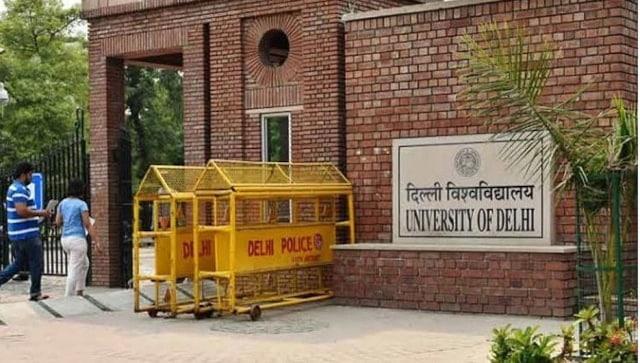
India: ‘Ad-hoc’ Teachers at Delhi University - From the Frying Pan into the Fire | Mukul Mangalik (The Wire, Jan 3, 2023)

 The Wire - Jan 03, 2023

‘Ad-hoc’ Teachers at Delhi University: From the Frying Pan into the Fire

After serving for years as 'ad-hoc' teachers working under adverse conditions, many such Delhi University faculty members are now finding themselves shunted out of their jobs.
Jan 03, 2023 | Mukul Mangalik

1

‘Kankar chuni-chuni, mahala banavli,
Hum bhaiili pardesi…’

Thousands of teachers, for no fault of theirs and in conditions not of their own making, have been employed for years on end, at colleges of Delhi University – together with a few more at some university departments – in exploitative ‘ad-hoc’ conditions of hyper-precariousness, humiliation and unequal benefits for doing the same, regular, perennial work necessary to the functioning of the university as permanent teachers. This, despite the intent and spirit to the contrary, of the Contract Labour (Regulation and Abolition) Act (CLRA Act), 1970, and the clear provisions spelt out in DU’s own Executive Council (EC) Resolution No. 120 (8) of 27.12. 2007 that

  • “i) In case there is a sudden, unexpected and short vacancy, arising out of a sudden sickness or death, on medical grounds (including maternity leave), abrupt leave or any other situation that may disrupt the normal process of teaching-learning, an ad hoc appointment may be made….
  • iv) The ad hoc appointment shall only be made for a period of more than one month and up to four months (i.e. 120 days) in accordance with the provisions contained in clause 3(1) of Ordinance XII.
  • v) Whenever the vacancy arises for the duration of more than four months, the same may be filled up on temporary basis as per due process and procedure i.e. through a duly constituted Selection Committee.”

Acknowledging the wrongs they have suffered and the invaluable contributions they have made through the intellectual and administrative labour they have put in towards the survival and daily making of DU colleges and departments as theatres of the possible and as sites for critical thought, social relationships and practice for all – including for permanent employees – teachers working in ‘ad-hoc’ capacity should, in all fairness and through appropriate mechanisms that respect the framework of the 200-Point DoPT Roster, be retained as permanent faculty. This would, by any norms and standards of natural justice, be the only dignified and just measure of recognising the well-deserved claim to their jobs that has accrued to ‘ad-hocs’ as an earned right through dint of long histories of work done by them in the adverse, if not hostile, working conditions and environments thrust upon them.

Instead, even many long-serving ‘ad-hoc’ teachers at DU, including those from the reserved categories and women, are being robbed off their jobs, dignity and rights. Abandoned, their lives menaced by imminent economic catastrophe, and their long histories of work sought to be erased, they are finding themselves on the cusp of losing all that really matters. It is as if the precious fabric-in-the-making that is DU, the unique weft and weave of which, they too, like so many others, have painstakingly contributed towards crafting, is, all of a sudden, being snatched from them, leaving them shell-shocked and the rest of DU shaken to the core.

Advertisement
Advertisement

In a cruel twist of irony, this is happening through interviews for permanent appointments that are being conducted across DU after a gap of almost a decade and a half, against posts on most of which teachers have been working in an ‘ad-hoc’ capacity for years, many for close to a decade and more. Unfortunately, far from embracing permanency, it is these very teachers, who now – as we come of the year when DU turned 100 and independent India 75 – have either already been removed from their jobs or are staring at this fearsome possibility.

This wheel of destruction demands serious collective deliberation towards devising ways of addressing the prevailing unprecedented existential crisis at DU in solidarity with all ‘ad-hoc’ teachers based upon an understanding and appreciation of their demand for permanent employment in their current places of work. If this does not happen immediately and with force of conviction, the coming months might continue as an unending nightmare not just for ‘ad-hoc’ teachers, but for all employees and students, while also turning, perhaps, into DU’s worst ever season of tragedy and shame.

2

‘Ad-hoc’ appointees become teachers in colleges after going through merit-based interviews. They are appointed for durations of up to four months. Within this period – in the event that the vacancy in question may be longer than four months – selection committees are supposed to be constituted, fresh interviews advertised, and appointments made against temporary or permanent posts. The stipulations of the EC of DU, as quoted above, are clear on this issue, and were in fact the norm, more or less, until 2009-10.

All of this has been informed by the understanding that ‘ad-hoc’ conditions must remain a transient moment in teachers’ lives, and that too only if absolutely necessary; that the regular work of teaching demands regular forms of employment; and that anything else would constitute unfair labour practice and negatively impact teachers’ work. It would, for instance – as indeed it has done – jeopardise the freedom to think critically and speak and teach without fear, allow deeply entrenched hierarchies and arbitrariness, sycophancy and obsequiousness, to inform all practices of institutional functioning, and cause long-term mental and physical damage to those faced with job insecurity or unemployment.

Yet, all across the colleges of DU, students are being taught by thousands of teachers who, while in no way responsible for infinite delays in interviews for temporary or permanent appointments, have been struggling for years in an ‘ad-hoc’ capacity – many, if not most of them, against substantive posts – to offer the best they can in the face of all possible odds. It is credibly estimated that until recently, upwards of 4,000 teachers at DU were serving as ‘ad-hocs’, a huge proportion of them for inordinately long spans of time.

This, combined with the additional employment of guest lecturers, seems to clearly indicate that DU, in violation of its own commitments, has witnessed the normalisation of ‘ad-hoc’ employment practices. It has been increasingly functioning on the exploited backs of low-cost casual labour, thereby also weakening the foundations of its existence as a university. Let us not forget, after all, that fair employment relations lie at the heart of sound institutions, but equally, that numbers alone, the number of teachers working as ‘ad-hocs’ for instance, or the number of years they might have done so and the changing structure of employment relations, tell us just a part of the story. Only with complementary histories of how individual teachers have experienced their long years of working as ‘ad-hocs’ and the implications of such work for their lives, shall we be able to fully grasp the ills that the spread of ad-hocism has spawned for teachers’ lives as well as for the practice of education at DU.

3

It bears emphasising that over the last many years – especially after 2009-10 – teachers who joined as ‘ad-hocs’ continued teaching in their respective positions not because they wished to continue as ‘ad-hocs’, but due to their commitment to public education and in the real hope, based on DU’s own avowed promises and past best practices, that interviews for temporary or permanent appointments would be conducted soon. Advertisements for permanent appointments did indeed appear and forms were bought and filled, over and over again. Yet, to their consistent dismay, with the exception of a few departments in some colleges around 2014-15, no interviews were conducted.

Instead, despite repeated demands raised by the DU teachers’ movement against the normalisation of ‘ad-hocism’, ‘ad-hoc’ appointments got further entrenched and were allowed to expand into the unjustifiable present system. The result has been the ‘permanent’ creation of a huge body of overburdened and harassed teachers, never absolutely certain about the renewal of their four-month long appointment contracts, and who even with renewal, have always suffered a day’s break in service between their two dates of appointment, while however, continuing to work on that particular day. This has effectively meant that ‘ad-hoc’ appointees have ended up working without pay on all break-in-service-days, year in and year out.

Additionally, ad-hoc teachers’ appointments have always been terminated on the last working day of an academic calendar, which normally falls in the month of May. Consequently, although they continued working thereafter despite not being on the rolls, ‘ad-hoc’ appointees did not receive their two months’ ‘summer salary’ until much later in the year, and that too only on condition that they secured a teaching job w.e.f the first working day of the new academic session starting in July. If, for any reason, this were to not happen, teachers could very well end up losing the salary due to them, or, in other words, performing weeks of unpaid labour: evaluating scripts, for instance, or doing admissions-related work and sundry administrative duties, but for no pay at all.

The unfair extraction of the labour services of ‘ad-hoc’ teachers over the past many years has been compounded by the absence of benefits that rightfully accrue to permanent employees. Teachers working in ‘ad-hoc’ capacity are, for instance, neither entitled to receiving gratuity, provident fund and increments in pay, nor to promotions, the full range of medical benefits and different kinds of paid leave, including for example, study leave, child care leave, or leave for attending conferences, refreshers courses/faculty development programmes etc. They are entitled, at most, to one casual and one earned leave per month, neither of which can be ‘carried over’ or en-cashed (in the case of earned leave). Medical leave maybe granted them but only against half pay, while, “in case, the ad hoc appointees wish to avail the facility of WUS Health Centre, they shall be allowed the membership of WUSHC for the specified period, for which they shall be issued temporary identity cards”. In particular, it needs to be remembered that it was only recently that DU’s EC resolved to grant maternity leave to ‘ad-hoc’ teachers.

Thus, although ‘ad-hoc’ faculty members are expected to do the same work as permanent teachers and although they have actually ended up doing much more, and that too, for years on end, their overall service conditions have remained much worse than those of permanent faculty, with the physically, economically and socially disadvantaged (including gender and minorities) amongst them faring the worst of all. If they have nonetheless, continued to work ‘permanently’ as ‘ad-hoc’ teachers in excess of their due share of responsibility and at great personal and professional costs to themselves, they have done so, their commitment to teaching apart, under force of circumstance and the arbitrary, if not unconstitutional employment conditions of ‘permanent ad-hocism’ imposed upon them.

4

In a marvellous twist to history, however, many of them have, through their resolve to encourage critical, independent thought and cultivate creative imaginations through reading, writing and discussing issues without fear, not only infused remarkable freshness and meaning for themselves through the work they have done, but have touched the everyday academic, intellectual and cultural life of colleges. They have done this both inside classrooms and laboratories and in the corridors, lawns, conference halls, auditoria, and the lanes and by-lanes of colleges and the university, while also performing, in enforced relative anonymity, the difficult daily tasks of institution building and the crafting of truly inclusive work spaces.

They have, in other words, not simply been shaped by DU and its colleges and laboured in turn, to keep them afloat and functioning over the past many years, but have actively contributed towards scripting, shaping, enriching and deepening cultures of freedom, democracy, intellectual enquiry, scholarship and festivity among colleagues and innumerable batches of students. It is for this reason perhaps, that for many ‘ad-hocs’, colleges and university departments, while often remaining ‘alienating’ sites for hyper-precarious and unduly extractive waged work, have also come to ‘belong’ to them as much as they have to their places of work through devising the fairest possible modalities.

With such histories of work and deeply felt everyday experiences of the injustices of ‘permanent ad-hocism’ behind them, it is no wonder that the argument has organically arisen from within the ranks of ‘ad-hoc’ teachers that they have earned for themselves a rightful claim to their respective posts and should therefore be retained as permanent employees at their places of work.

Indeed, the demand for permanency, resting as it does on the plea to acknowledge the illegitimacy of the ‘ad-hocism’ that has been inflicted on them at DU, and to respect the demanding histories of the work they have performed, is unassailable. It easily overrides any arguments made to the contrary and resonates powerfully with a few lines in Majaz’s ‘Bol Ari O Dharti Bol’:

‘Naami aur mashoor nahin hum, Lekin kya mazdoor nahin hum…
Bol Ari O Dharti Bol…
Bol ki teri khidmat ki hai,
Bol ki tera kaam kiya hai…
Bol ki humse jaagi duniya,
Bol ki humse jaagi dharti.’

It is injustice enough to have compelled teachers to work permanently in ‘ad-hoc’ conditions. It is cruelty many times compounded to rob them of their jobs now, the kind of cruel injustice that Gorakh Pandey writes about in his Bhojpuri poem, ‘Ajadiya Hamra ke Bhaave le’:

‘Kankar chuni-chuni, mahala banavli,
Hum bhaiili pardesi…’ 

5

“In all people I see myself… I do not ask the wounded person how he feels, I myself become the wounded person,” wrote Walt Whitman in ‘Song of Myself’, the words resonating with Xhosa sensibility that “people are people through other people”. The humiliation that has been inflicted on ‘ad-hoc’ teachers at DU, and the havoc and insecurities being now wrought in their lives, all of this has not been happening to ‘others’. It is happening to us all.

Freedom, justice, a sense of wellbeing and the possibilities for living our lives as human beings to their full potential, are after all, indivisible and can only be truly experienced and realised when they accrue to all. Let us then come together to ‘Ring the bells that still can ring’ and to uphold our rights, our common humanity and our commitment to higher education by listening to the voices of ad-hoc teachers, documenting all that they have experienced and the histories of the precious work they have done, and by standing in solidarity with their urgent cry for ‘permanence’ so that nobody and nothing is forgotten, justice and rights not crushed, dreams not wasted and hope not torn to shreds, for, ‘That’s how’ as Leonard Cohen sang, ‘the light gets in’.

Mukul Mangalik is a former teacher of history, Ramjas College, University of Delhi.